


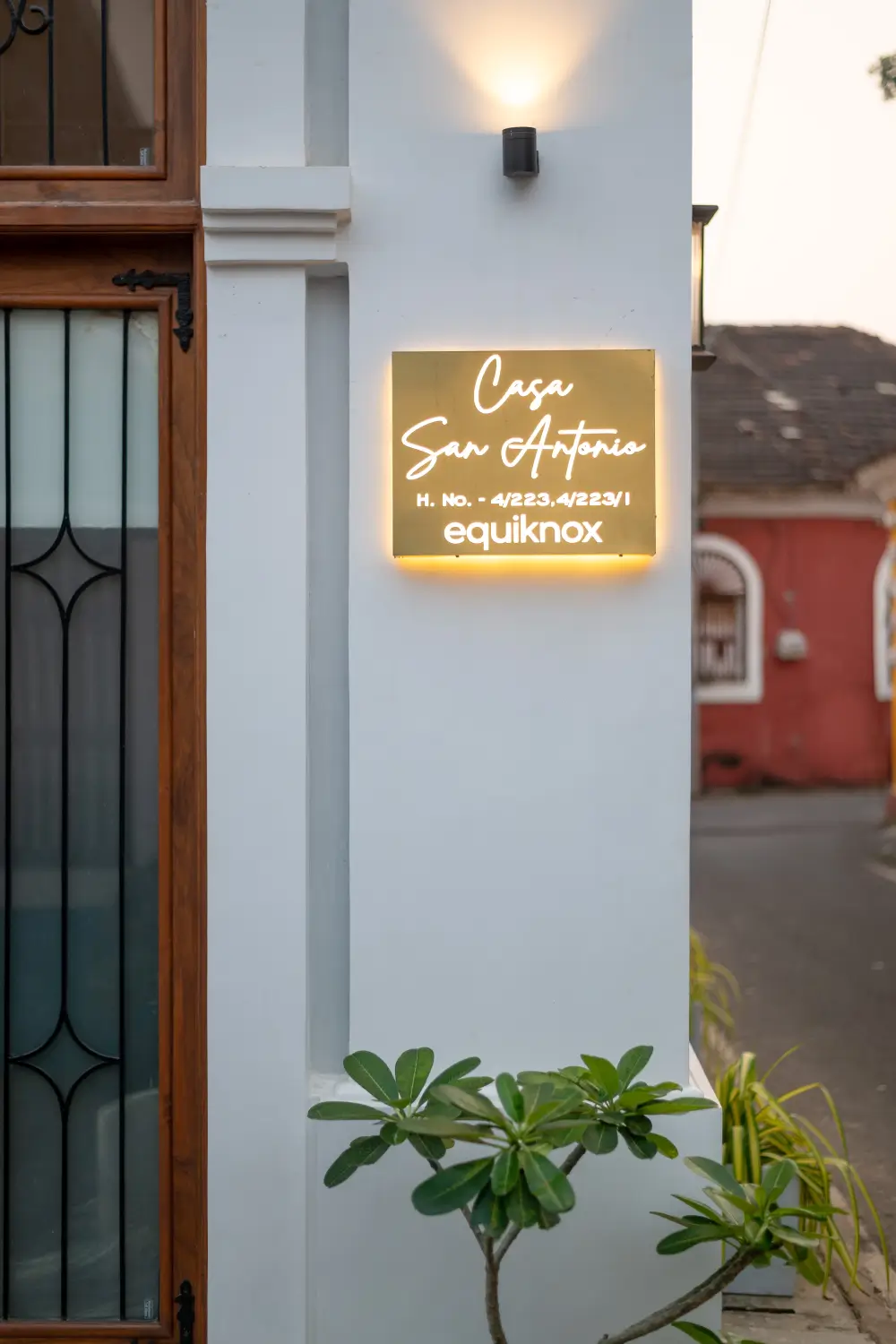
Casa San Antonio
Fontainhas, Cortin
Situated at the entry to Panjim’s iconic Church Hill, this historic area began taking shape in the 17th century. When the Our Lady of the Immaculate Conception Church was built atop the hill, it quickly became a central landmark whilst the area still remained a challenge for people to access. Later on, the hillside was partially carved to create a stepped approach and by 1878, a bold passage known as Corte do Oiteiro, or Cortin, was cut through Altinho’s hillside.
Today, Cortin remains a quiet and character-filled neighbourhood known for its colourful houses, winding streets, and a continuation of ancestral heritage for local families. Its layout today still echoes the practical vision that shaped it centuries ago. Over the years Cortin grew to be home to a mix of Goan families, high-ranking officials, civil servants, musicians, reporters, and artisans. Many official residences were marked by symbolic statues, often a military figure or a lion, serving as distinctive landmarks to identify the homes of officials.
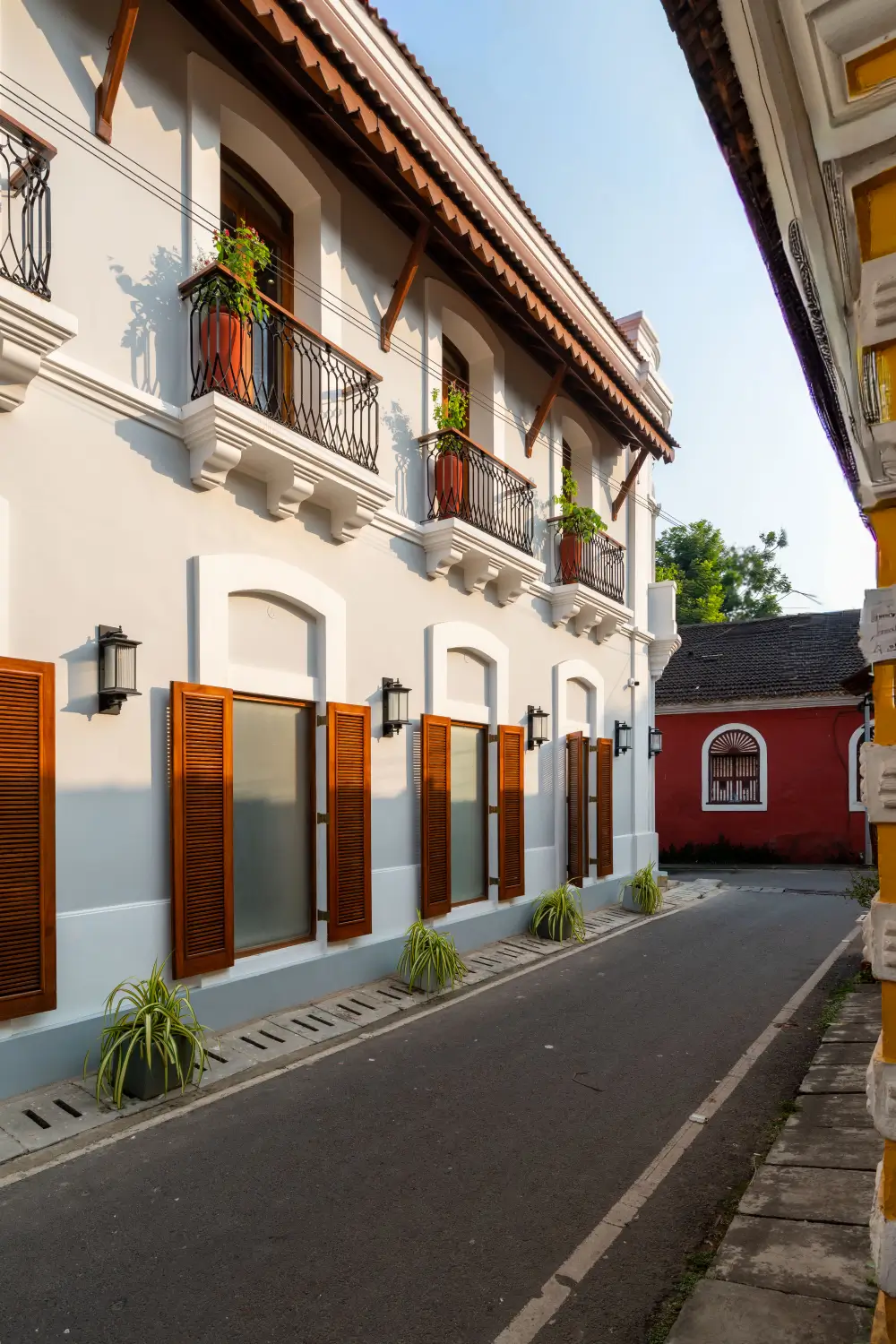
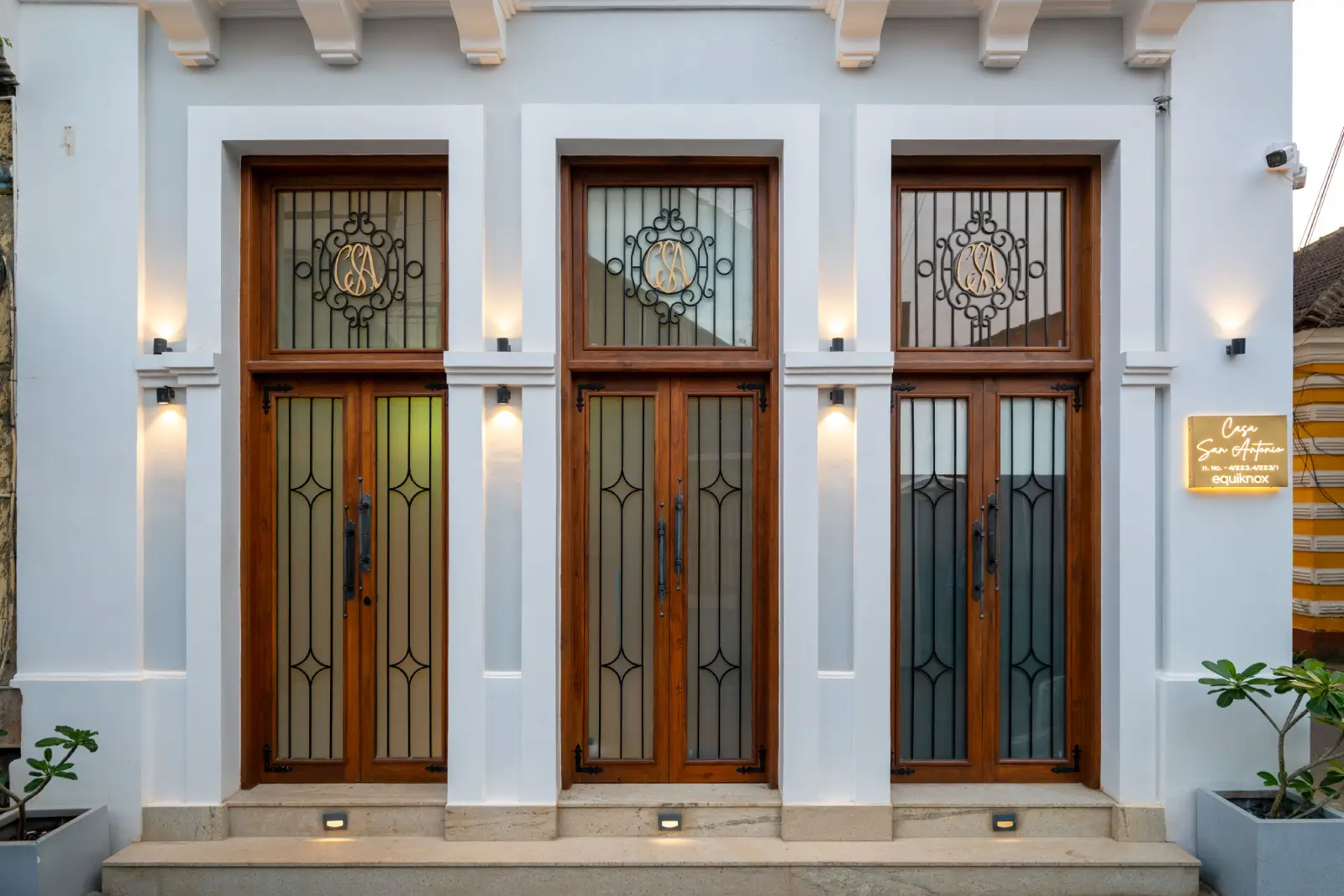
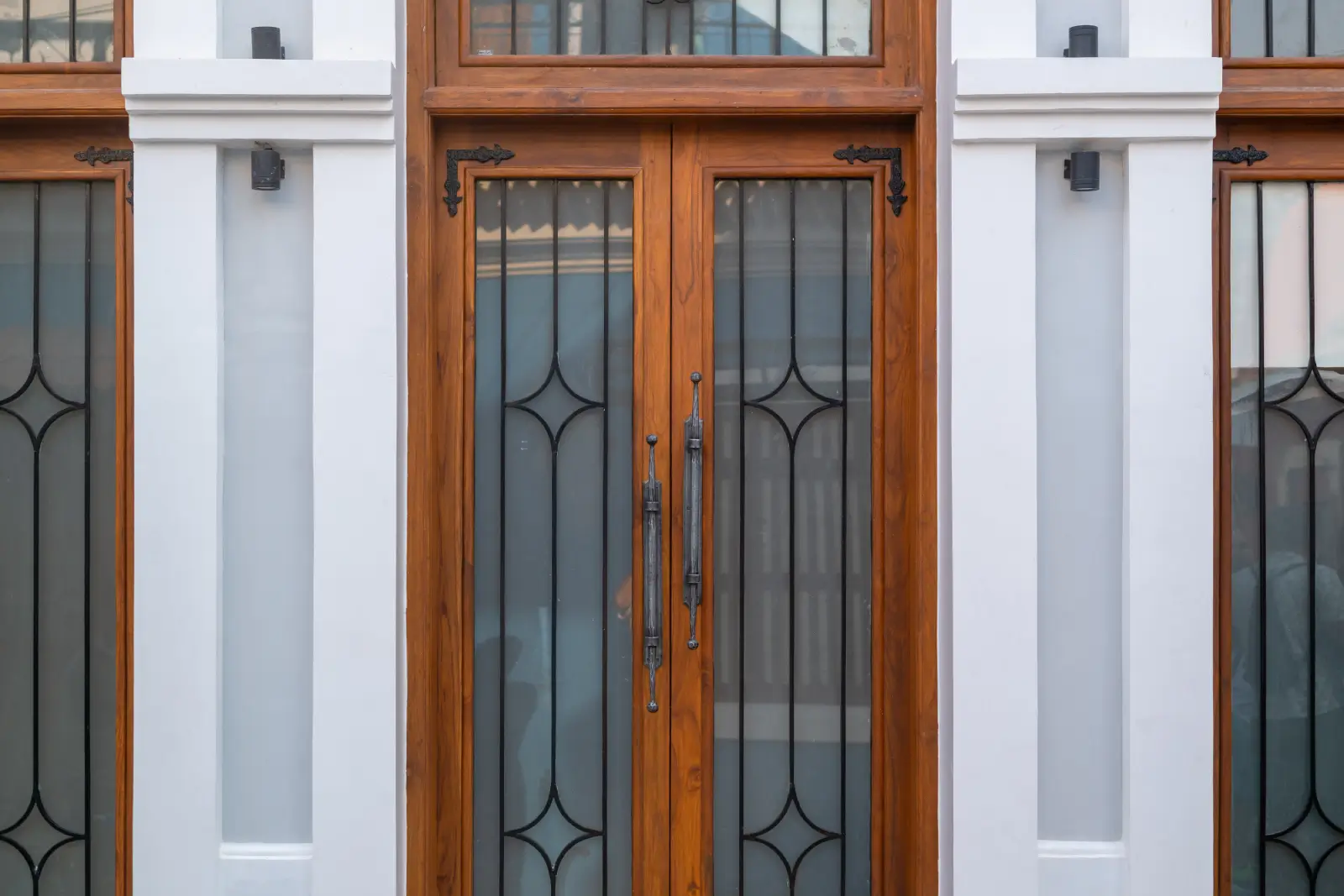
Characterised by narrow winding lanes, brightly coloured façades, red-tiled roofs, and ornamental wrought-iron balconies, the homes here tell stories of a colonial past shaped by Portuguese aesthetics and Goan sensibilities. This neighbourhood is renowned as a UNESCO Heritage Site for its unique architecture, as it blends Portuguese influence with Goan motifs within the Latin Quarters of Fontainhas and Cortin. Many of these structures stand on laterite stone foundations, with grand wooden doors and traditional mother of pearl shelled windows that allow light while ensuring privacy and ventilation, a practical elegance suited to Goa’s tropical climate. Courtyards, inner wells, and street-facing balcãos (covered sit-outs) were central to the social life of these homes, creating a timeless rhythm between architecture and community.
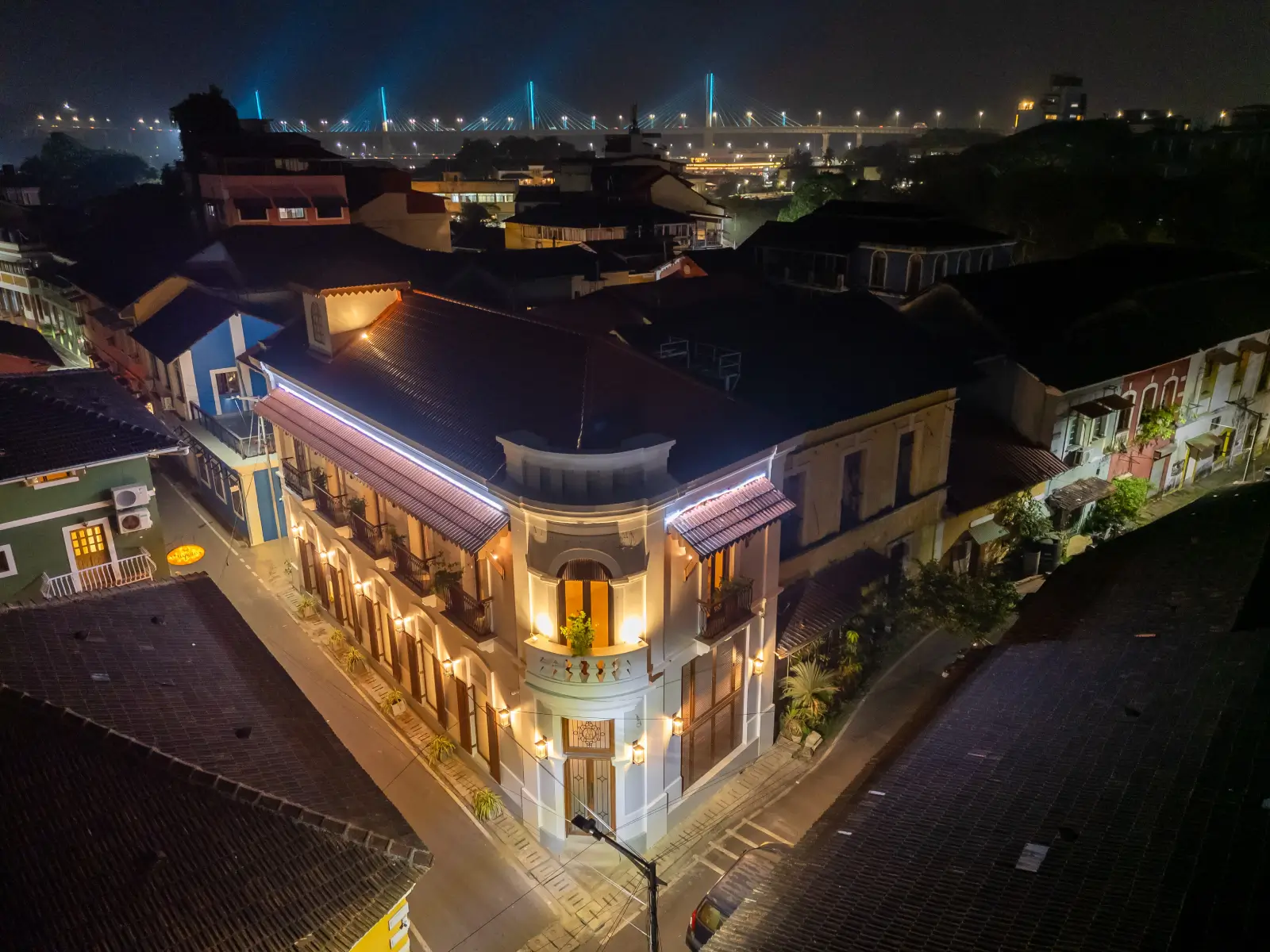
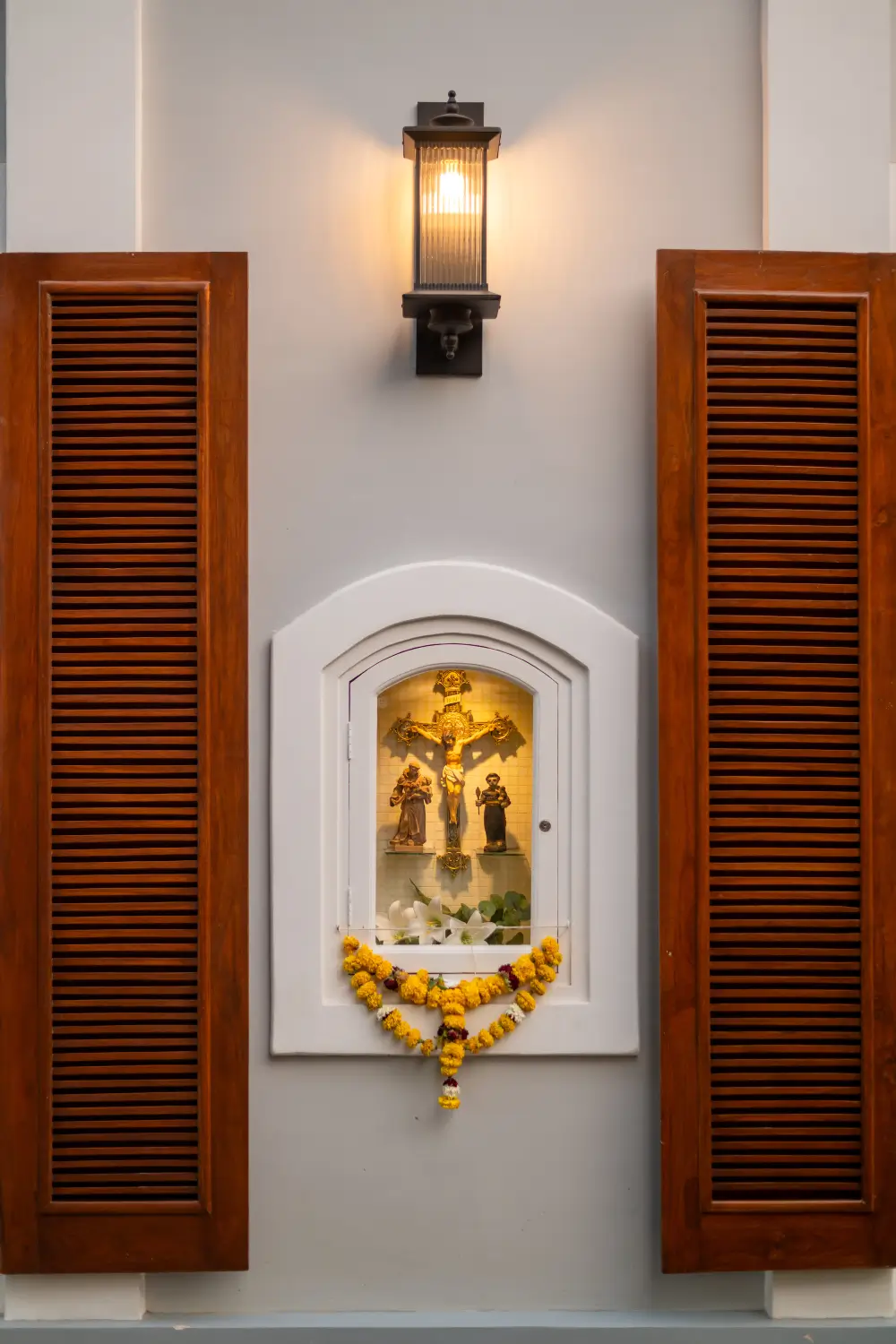
Over the years, one particular house lived quietly in Fontainhas, Cortin, the one now called Casa San Antonio. Over a hundred years old, it stood strong with laterite walls, weathered by time yet unshaken. Passed down through generations, it found itself in the hands of different owners over the decades. Curiously, many of them shared one thing in common; the name Antonio. Built into one of its outer walls is a sacred shrine to St. Anthony, known as Santo António in Portuguese. For centuries, the local community has gathered here for novenas and to celebrate the feast of the beloved saint. The shrine, much like the house itself, became a powerful symbol of faith, continuity, and devotion, a tradition that continues today.
When the house changed hands to its present owner, Mr. Antonio Oscar de Lima Pereira, founder of Equiknox, whose full name also carries Antonio, the Portuguese form of Anthony, it was more than a coincidence. He shared not just a connection in name but a kinship in spirit with the home’s past. Having spent his childhood in the same neighbourhood, Mr. Oscar carried fond memories of its charm and character. It was this deep connection to the history of the area, combined with his appreciation for its cultural significance, that motivated him as a keeper of history. When he came across Casa San Antonio, he saw in it a timeless beauty, not just of architecture, but of emotion and legacy.
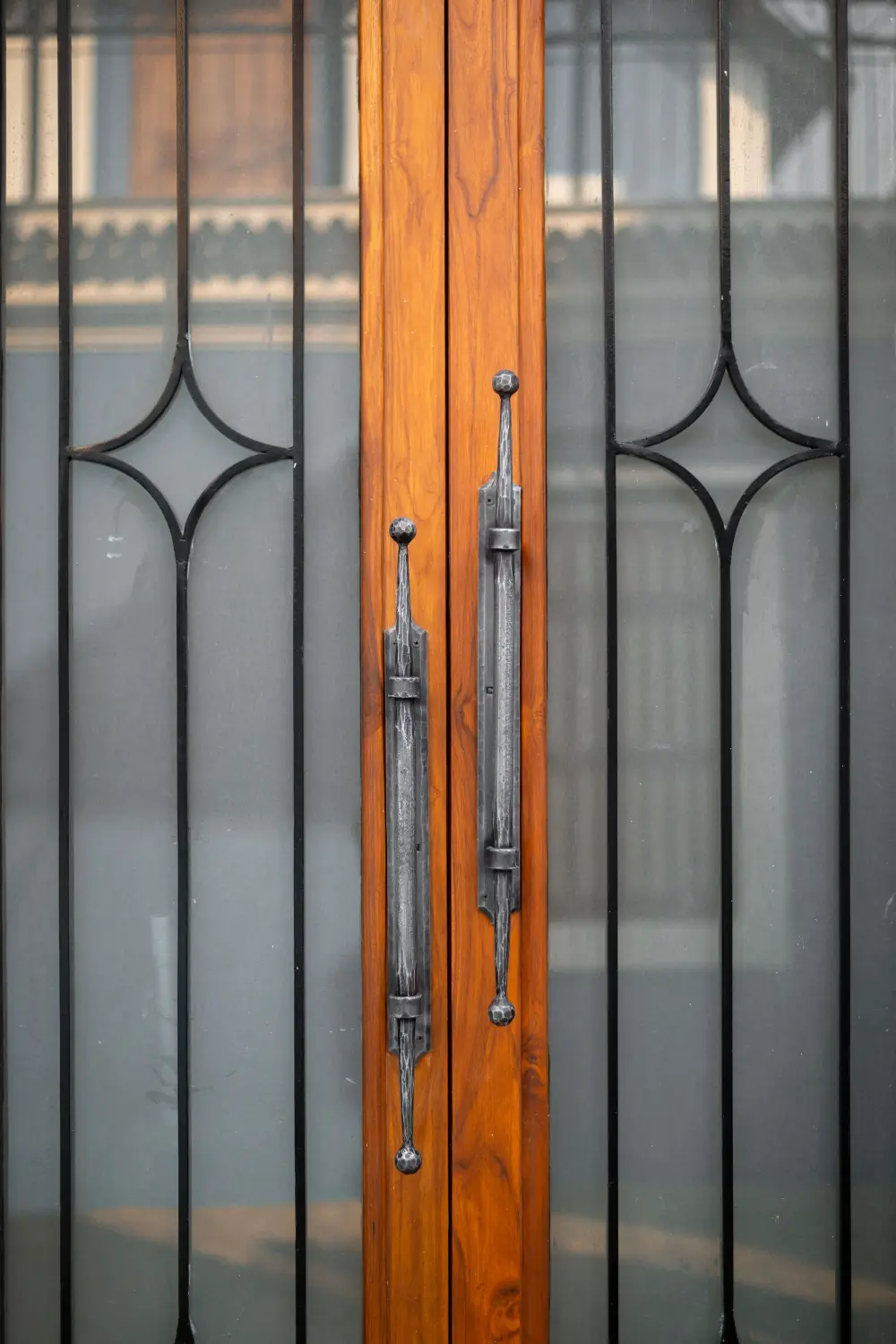
Every cracked surface, every aged beam, every fading detail was restored to its timeless originality. Local artisans were engaged, traditional materials carefully sourced, and history was slowly revived. Every effort was made to preserve what time had gifted, honouring the authenticity that gave the home its soul.
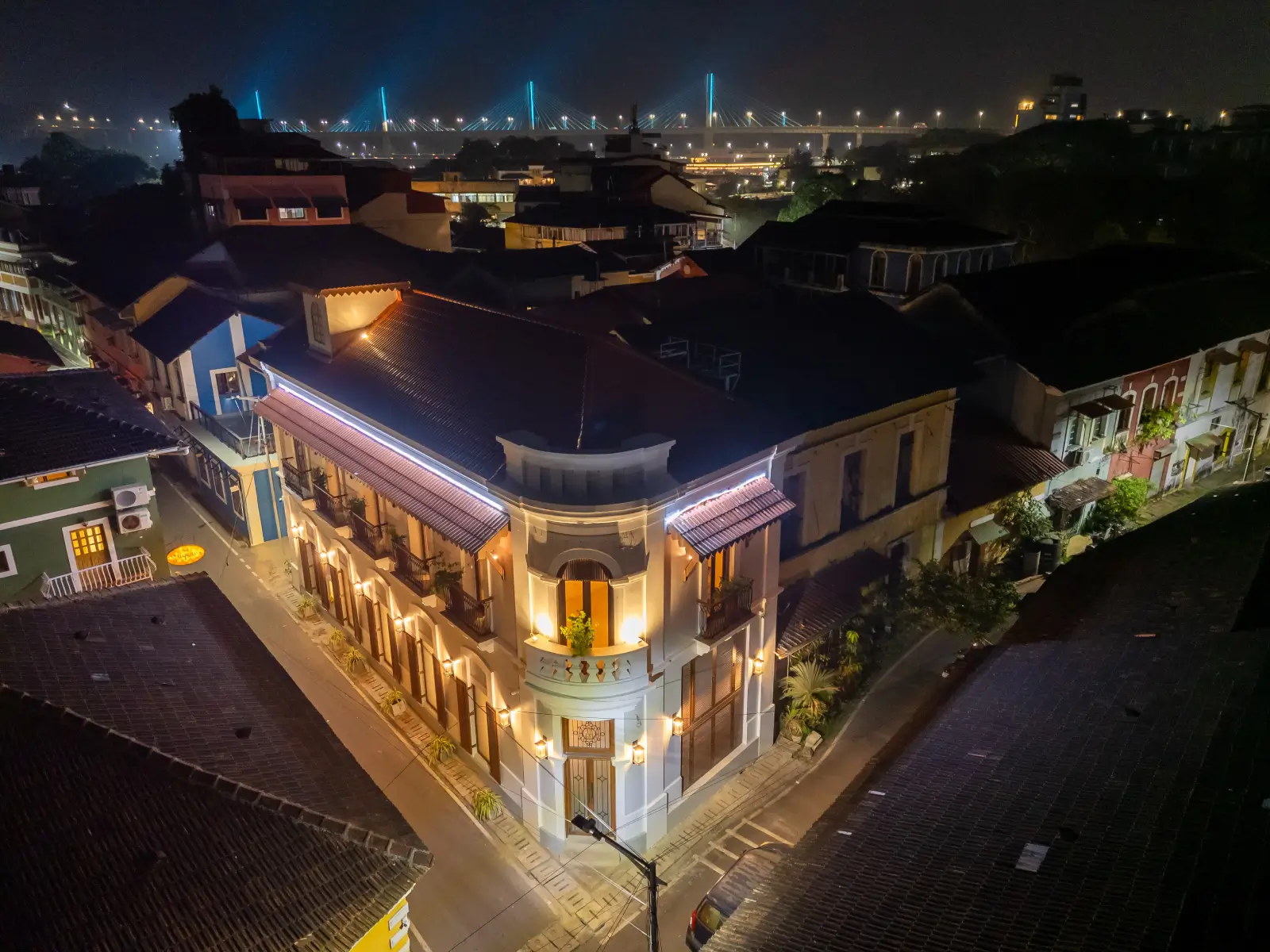
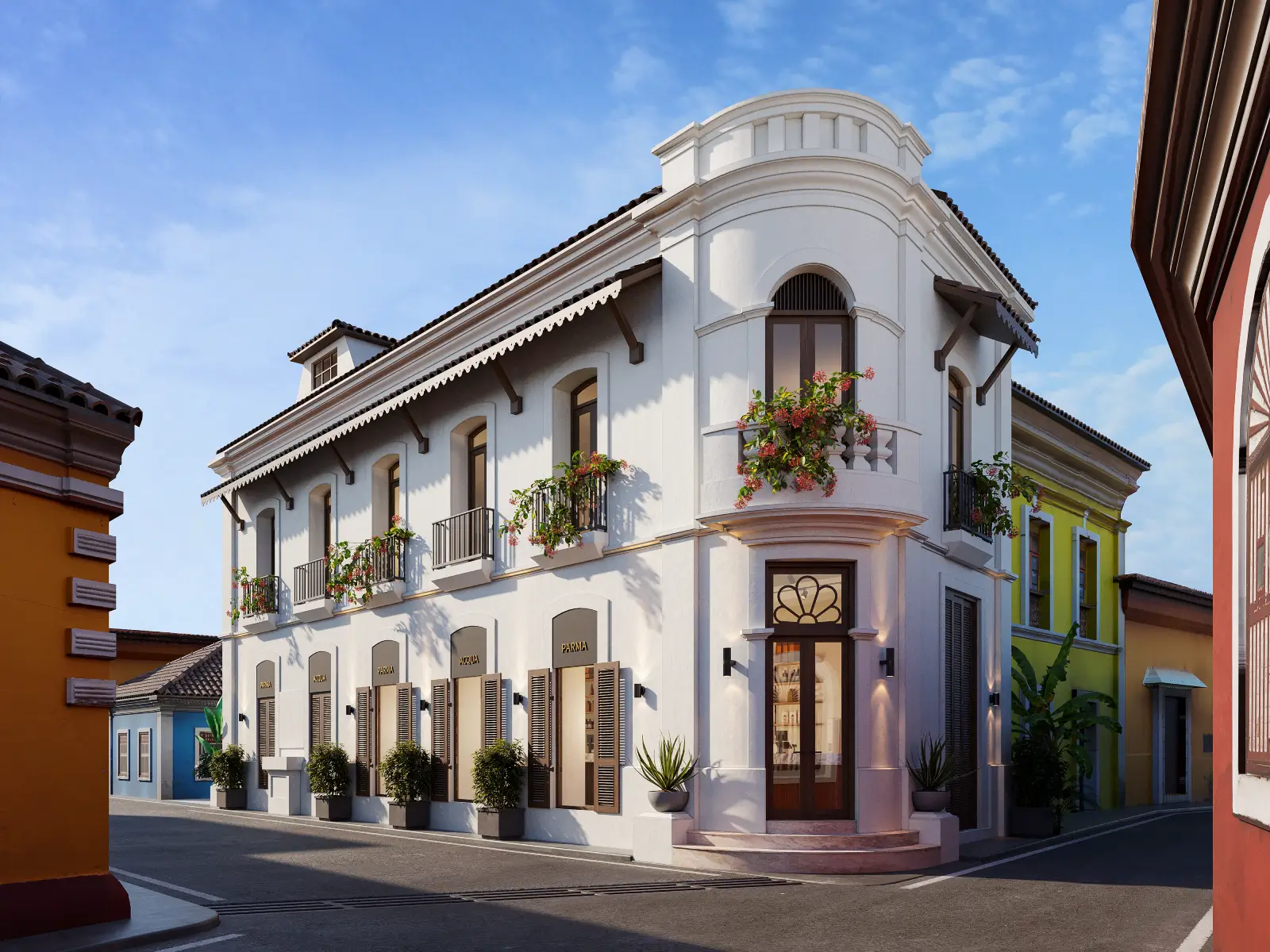
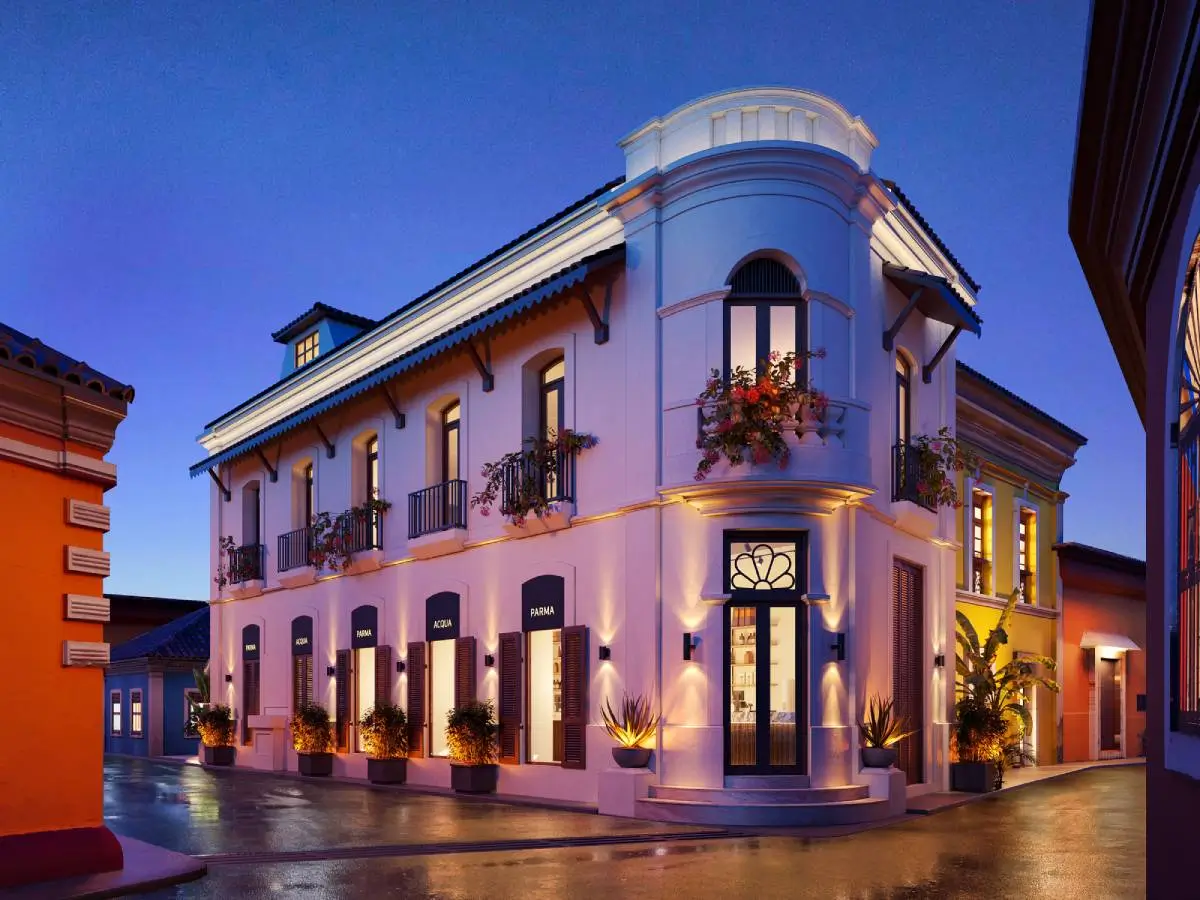
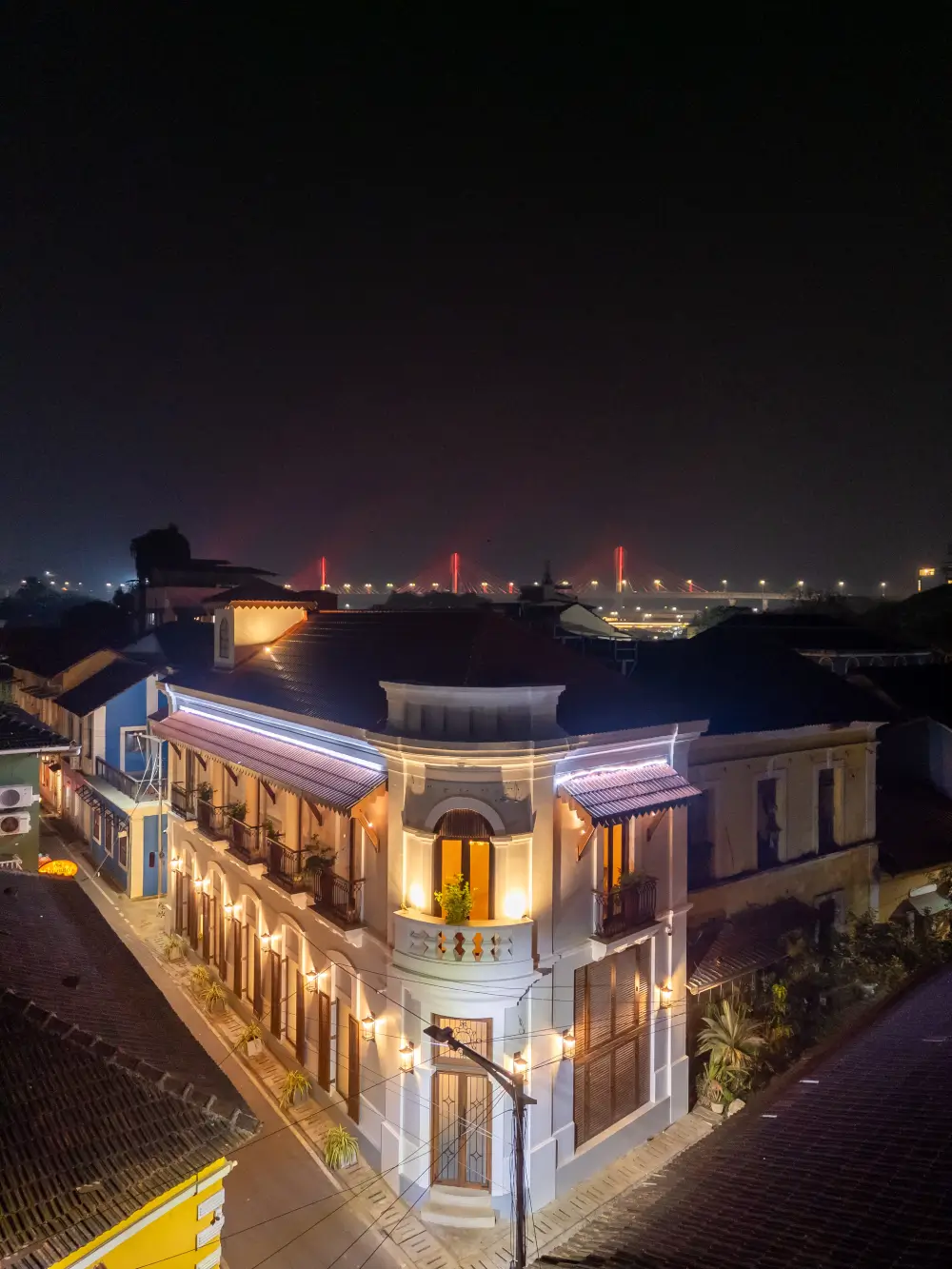
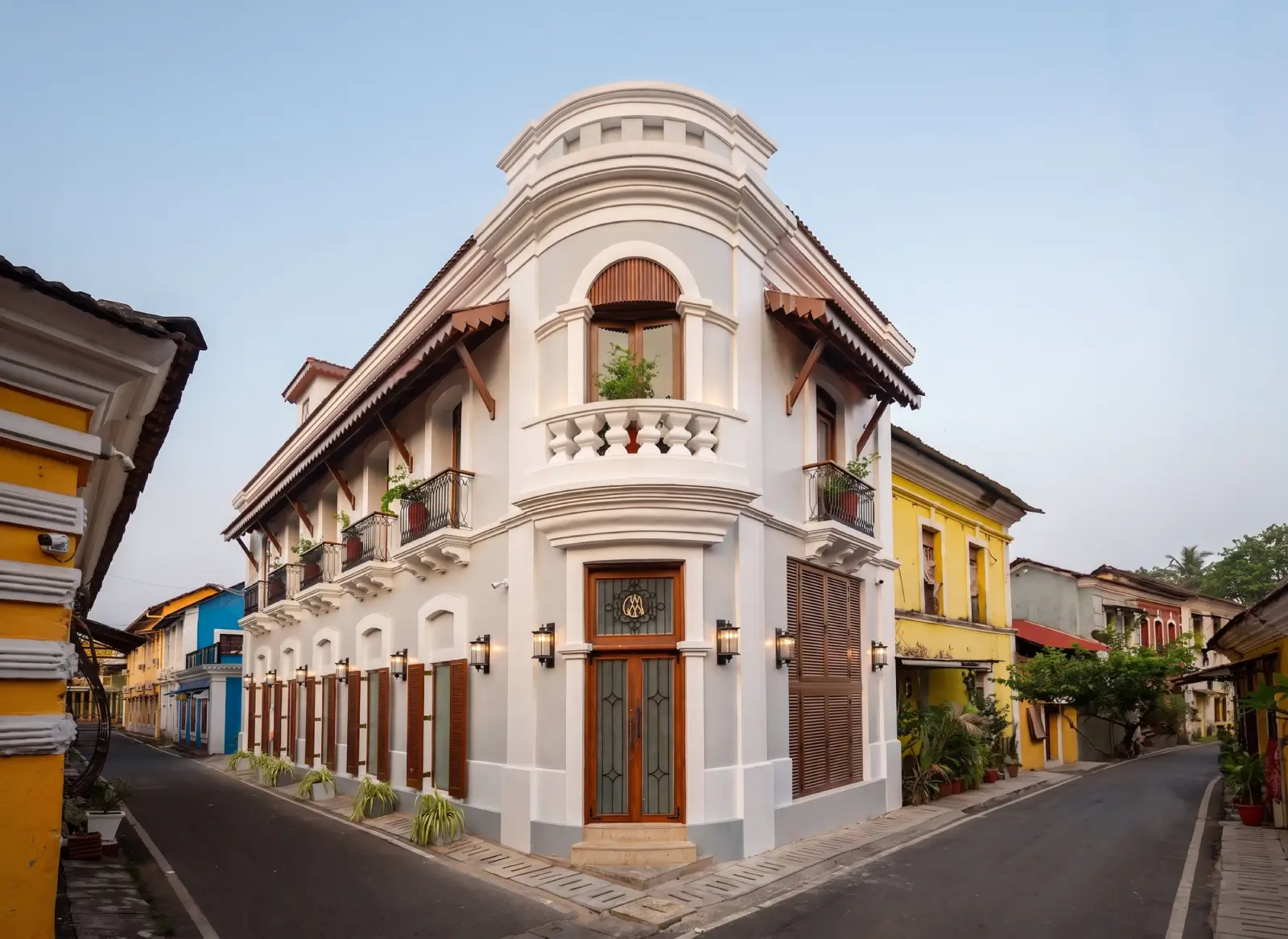
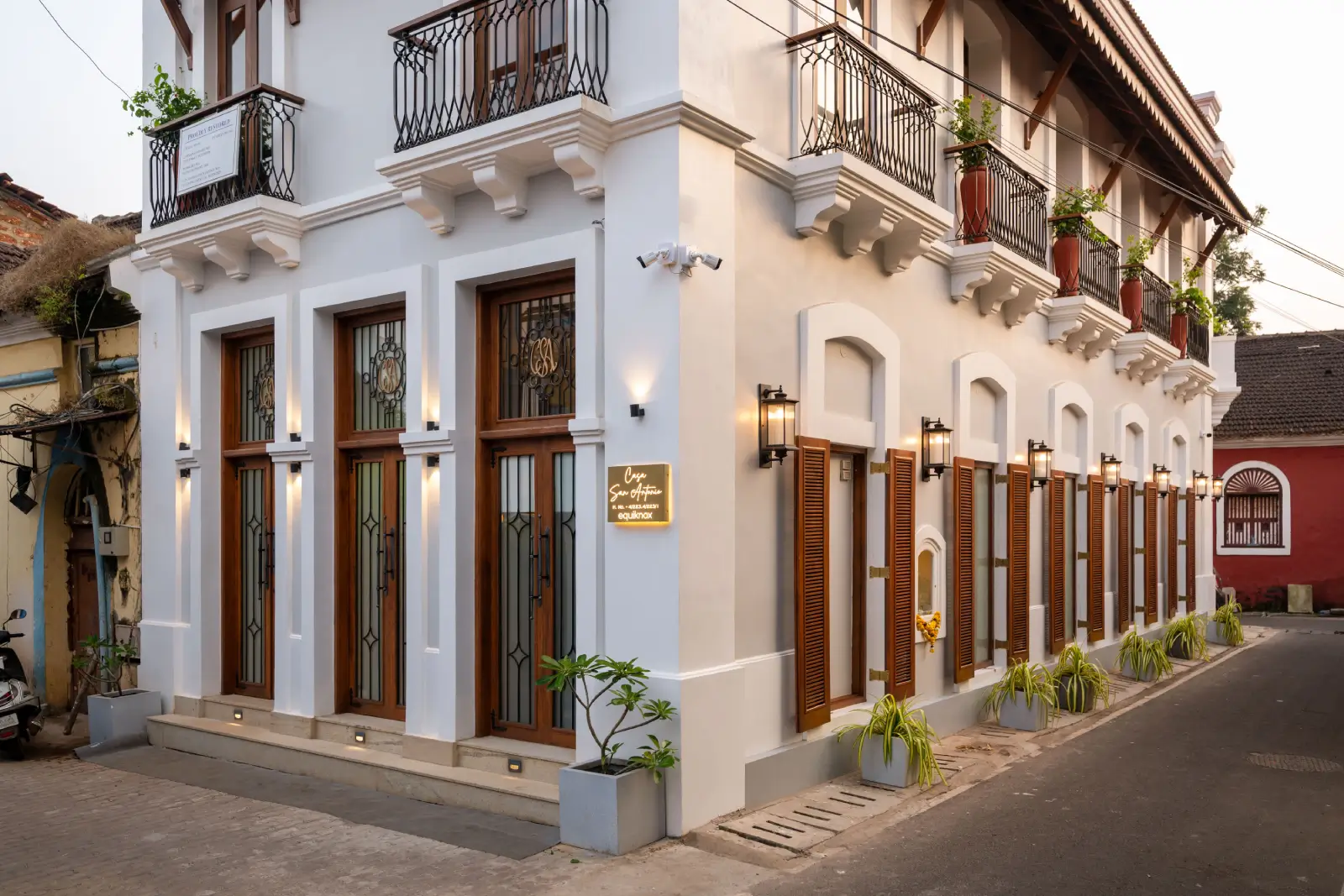
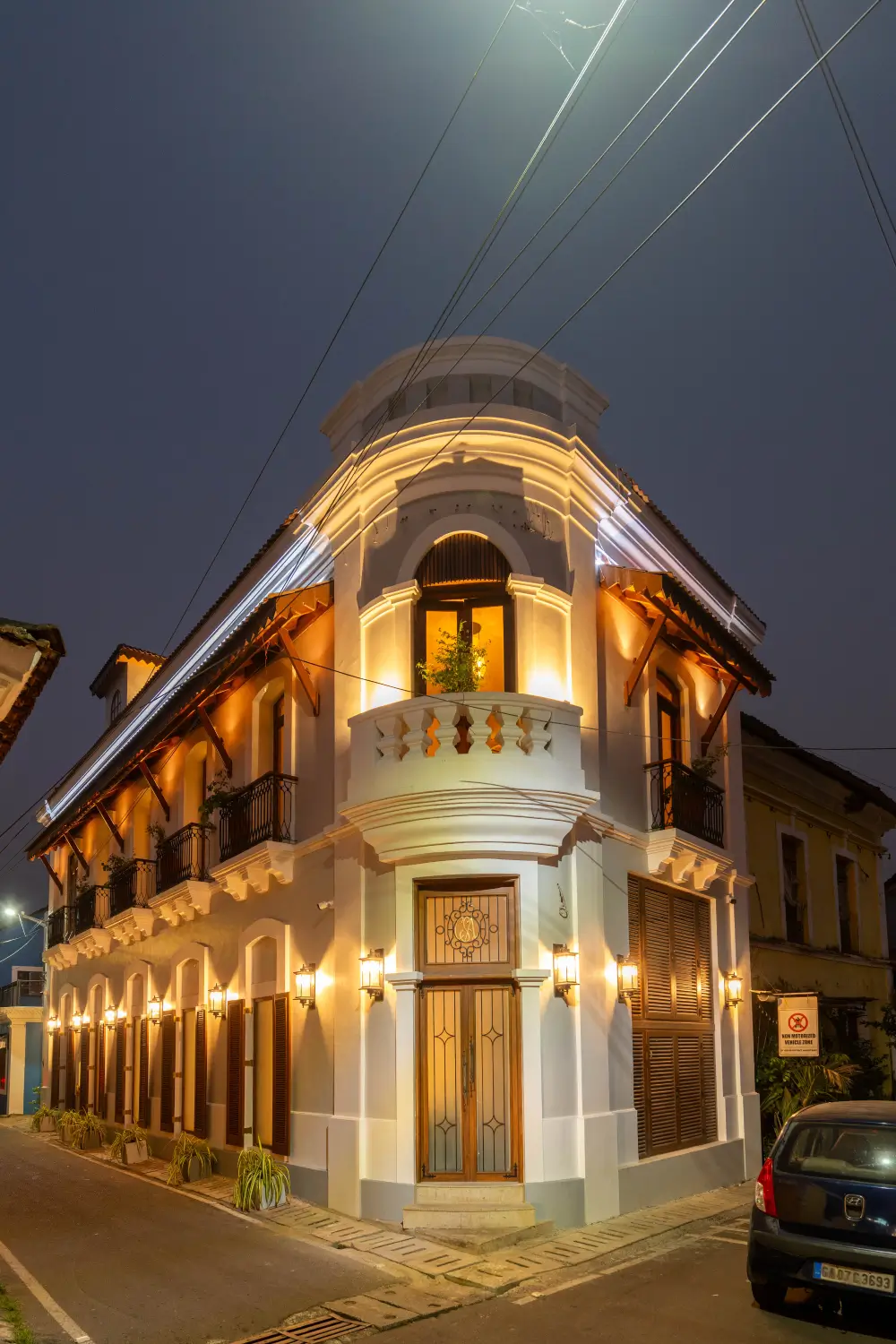
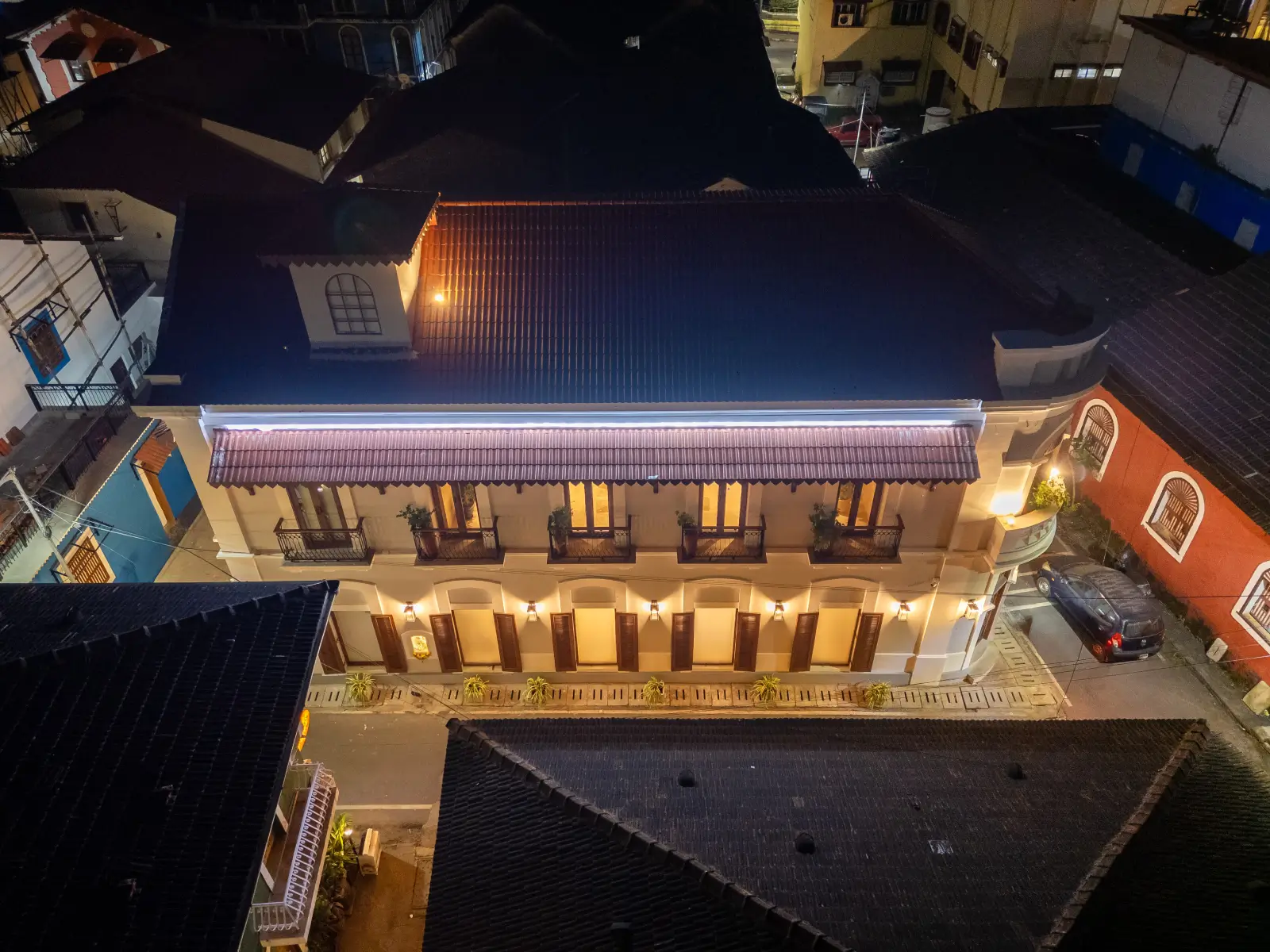
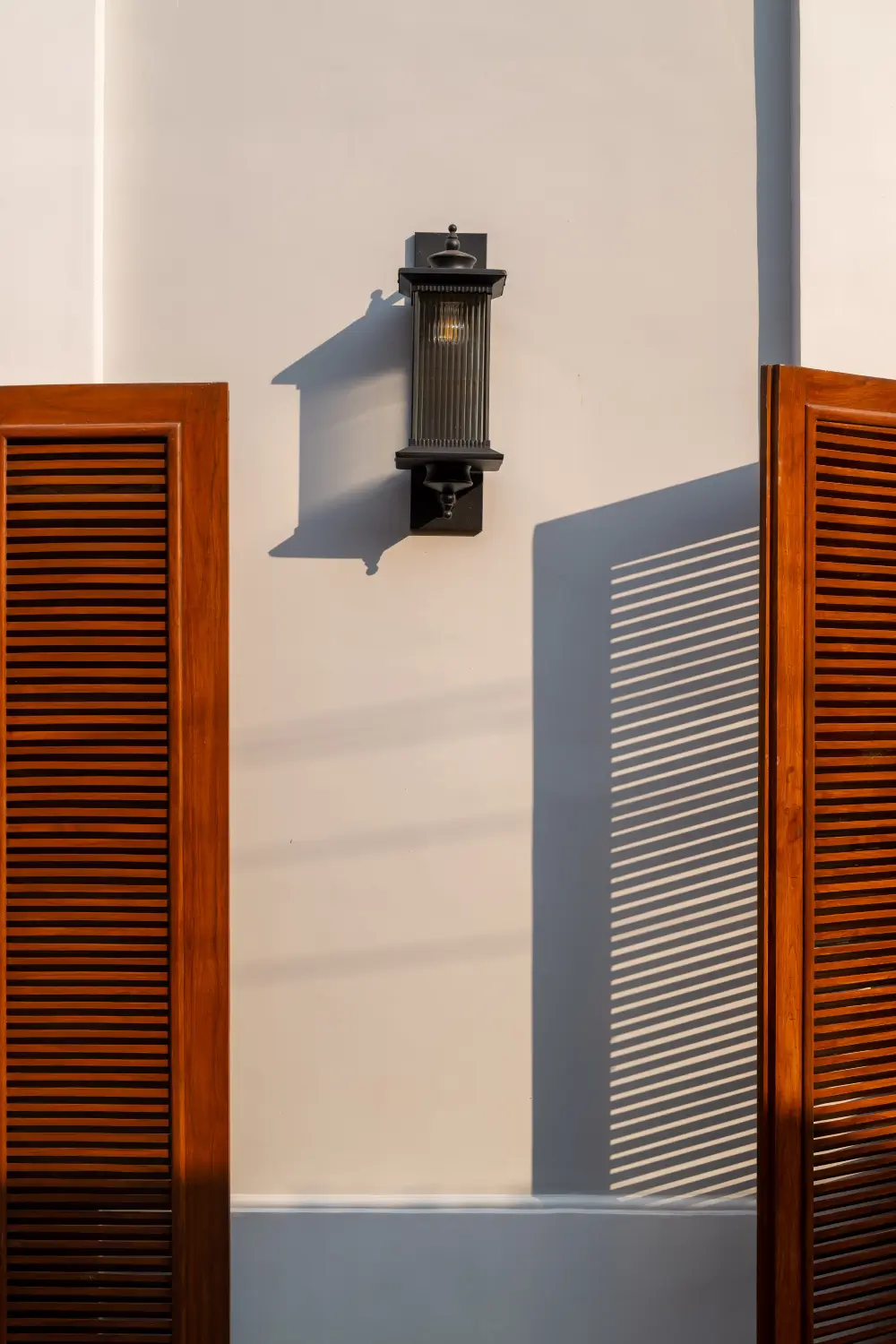
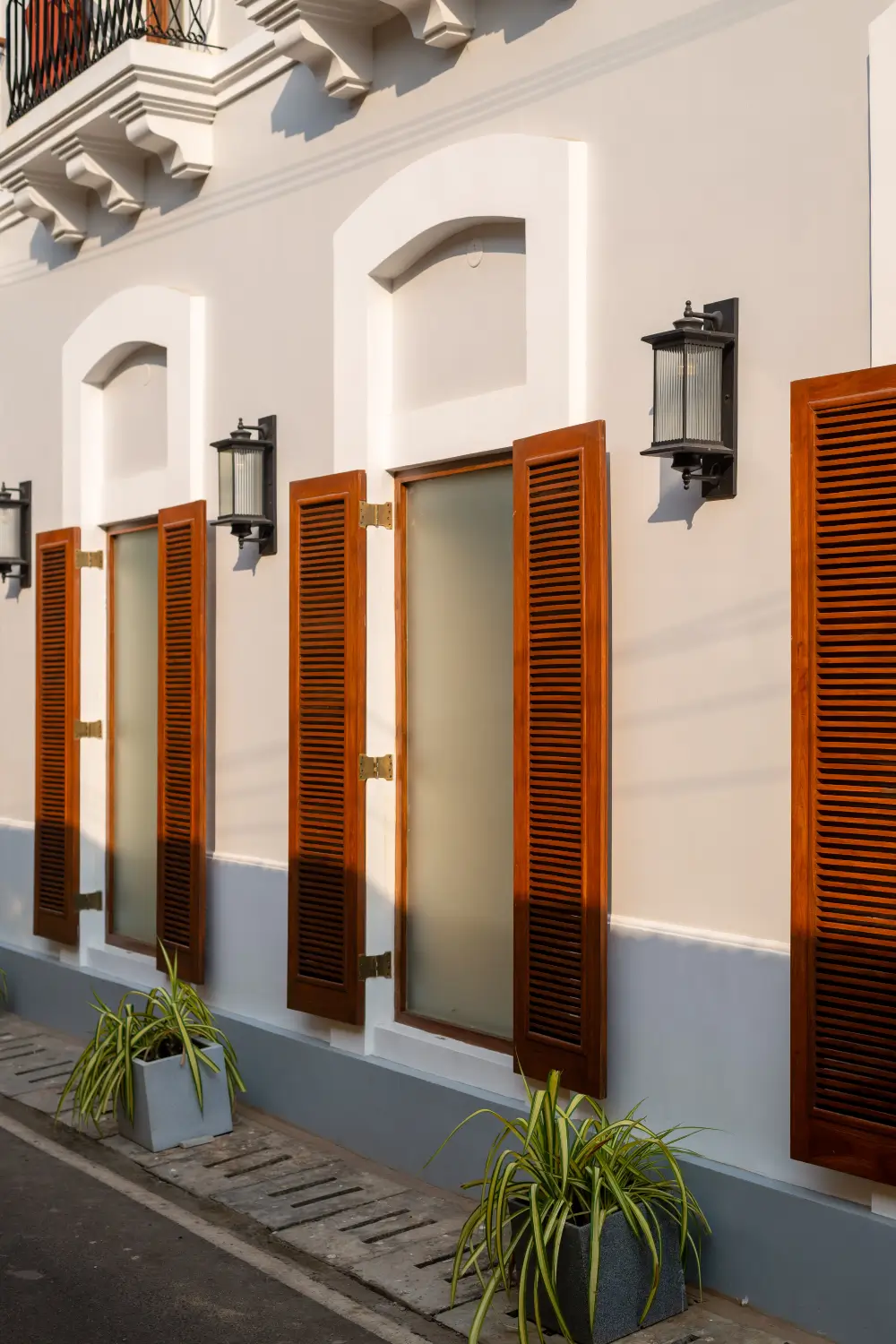
Today, Casa San Antonio stands as an icon at the entrance to Fontainhas, Cortin. Its restored façade gleams in pristine white, accentuated by soft curves, arched windows, and wooden shutters. The signature turreted corner, now beautifully revived, commands attention like a sentinel of history. Equiknox restored the house with deep respect, making it an enduring part of the neighbourhood’s timeless heritage. Through this careful restoration, Mr. Oscar is leaving Casa San Antonio as a lasting legacy, preserving its history and spirit for generations to come.
Casa San Antonio
A heritage address proudly restored by Equiknox!
Luxury redefined by creating exclusive addresses
Configuration Restoration Project
Status Completed
Type Heritage Restoration
Patrons of the Serendipity Arts Festival 2025
In recognition of its cultural and architectural significance, Casa San Antonio was selected as one of the venues for the 10th Edition Serendipity Arts Festival, where the historic residence became a setting for a unique cultural and culinary experience inspired by Goa’s traditional tavernas and cuisine.
The collaboration brought together heritage, art, food and contemporary storytelling, allowing Casa San Antonio to be experienced not simply as a restored home, but as a living part of Goa’s cultural landscape.
Casa San Antonio is a reflection of Equiknox’s belief that restoration is not merely about preserving a building—it is about keeping its stories, character and connection to place alive.

Gallery
Location Proximity
Fontainhas, Panjim – Goa’s Latin Quarters
Nestled in the heart of Panjim, Fontainhas is Goa’s iconic Latin Quarters — a charming blend of Portuguese heritage and Goan soul. With its narrow lanes, vibrant colonial-era houses, and quaint balconies, it feels like stepping into a European postcard.
Stroll past art galleries, local bakeries, and centuries-old chapels, all while soaking in the calm, timeless atmosphere. During the annual art festival, the neighborhood comes alive with music and creativity.
Fontainhas is a must-visit for anyone seeking culture, history, and a touch of old-world romance in the midst of modern Goa.